If you're a student studying the American Revolution, those famous quotes you keep hearing in class aren't just old words on a page. They shaped a nation. Understanding what leaders like Patrick Henry, Benjamin Franklin, and Thomas Jefferson actually said and why they said it helps you write better essays, answer test questions with confidence, and see how language can change history. These aren't dusty relics. They're the foundation of American political thought, and they still show up in speeches, courtrooms, and everyday conversations today.
Why Should Students Learn Revolutionary War Quotes?
Teachers assign these quotes because they reveal the mindset of people who risked everything to break from British rule. When Patrick Henry stood before the Virginia Convention in 1775 and declared, "Give me liberty, or give me death," he wasn't just being dramatic. He was persuading hesitant delegates to commit to armed resistance. Understanding the context behind each quote turns memorization into real learning.
For students, these phrases serve several practical purposes:
- Essay evidence: Dropping a well-chosen quote into a history paper shows your teacher you've done the reading.
- Test preparation: Many AP U.S. History and state exam questions reference these lines directly.
- Critical thinking: Analyzing what a quote meant in 1776 versus how it's used now builds stronger reasoning skills.
- Civic literacy: These phrases still appear in political debates, legal arguments, and public discourse.
If you want a broader collection beyond the most common ones, we've put together a full list of famous quotes from the American Revolution for students that covers lesser-known but equally powerful statements.
What Are the Most Recognized Quotes from the American Revolution?
Several lines from this period have become so embedded in American culture that most people recognize them even without knowing the original speaker or setting. Here are the ones students encounter most often:
"No taxation without representation."
This wasn't a single quote from one person it was a slogan repeated across the colonies throughout the 1760s and 1770s. Colonists argued that Parliament had no right to tax them because they had no elected members in the British government. The phrase appeared in letters, pamphlets, and protest signs. It became the clearest summary of the colonists' political grievance.
"Give me liberty, or give me death."
Patrick Henry delivered this line on March 23, 1775, during a speech at St. John's Church in Richmond, Virginia. He was arguing that war with Britain was inevitable and that the colonies should prepare to fight rather than negotiate further. No written copy from that day survives the version we have was reconstructed years later by a biographer. That's an important detail students should know when citing it.
"We hold these truths to be self-evident, that all men are created equal."
Thomas Jefferson wrote this as the opening of the Declaration of Independence's second paragraph. It laid out the philosophical argument for breaking from Britain: that people have natural rights life, liberty, and the pursuit of happiness and that governments exist to protect those rights. The phrase has been quoted and debated ever since, from Abraham Lincoln's Gettysburg Address to Martin Luther King Jr.'s "I Have a Dream" speech.
"I only regret that I have but one life to lose for my country."
Nathan Hale reportedly said this before his execution by the British in September 1776. He was a young schoolteacher who volunteered to spy on the British in New York. He was caught and hanged at age 21. Like Henry's speech, there's no contemporary written record the quote comes from accounts written after the fact. This is a good example of how the original meanings of revolutionary war phrases sometimes get simplified or idealized over time.
"These are the times that try men's souls."
Thomas Paine opened his pamphlet The American Crisis with this line in December 1776. George Washington ordered it read aloud to his troops before crossing the Delaware River. The Continental Army was losing badly, soldiers were deserting, and morale was collapsing. Paine's words were meant to convince people that suffering was temporary but surrender would be permanent.
"Join, or die."
Benjamin Franklin published this phrase along with a cartoon of a cut-up snake in the Pennsylvania Gazette in 1754. It originally referred to the need for colonial unity during the French and Indian War, but it was revived during the Revolution to rally support for independence. It's one of the earliest examples of political propaganda in American media.
Where Did These Quotes Originally Appear?
Students sometimes assume all these quotes come from formal speeches or official documents. That's not always the case. Here's a quick breakdown of the sources:
- Speeches and orations: Patrick Henry's "liberty or death" line and other addresses to colonial assemblies.
- Official documents: The Declaration of Independence, the Constitution, and state declarations of rights.
- Pamphlets and broadsides: Thomas Paine's Common Sense and The American Crisis were cheap, widely distributed printings meant for ordinary people not elites.
- Letters and private writings: John Adams and Abigail Adams exchanged letters full of quotable lines, including Abigail's famous plea to "remember the ladies."
- Newspapers: Colonial printers were central to spreading revolutionary ideas. Franklin, Samuel Adams, and others used the press strategically.
Understanding the source matters. A quote from a private letter carries different weight than one from a public speech. For a deeper look at how these phrases were originally understood, our guide on revolutionary war phrases and their original meanings breaks down the historical context.
How Can Students Use These Quotes Effectively in Writing?
Knowing a quote is one thing. Using it well is another. Here are common mistakes students make and how to fix them:
Dropping a quote without context
Writing "Patrick Henry said, 'Give me liberty, or give me death'" and then moving on doesn't tell your reader anything. Explain who was speaking, where, when, and why the statement mattered at that moment. For example: "In March 1775, as Virginia's delegates debated whether to raise a militia, Patrick Henry argued that further negotiation with Britain was pointless and ended his speech with the now-famous line, 'Give me liberty, or give me death.'"
Using quotes that don't match your argument
Picking a famous line just because it sounds impressive is a weak strategy. Make sure the quote actually supports the point you're making. If you're writing about colonial economic grievances, "No taxation without representation" fits perfectly. "Give me liberty, or give me death" might not, unless you're connecting economic frustration to the willingness to fight.
Ignoring the speaker's bias
Every quote comes from someone with a point of view. Patrick Henry was a slaveholder arguing for freedom a contradiction worth noting. Thomas Paine was a radical pamphleteer whose later works on religion made him deeply unpopular. Citing these figures without acknowledging their full picture gives an incomplete story.
How Did Revolutionary War Slogans Shape Modern Language?
Many phrases from the 1770s didn't stay in the past. They migrated into everyday English and political vocabulary. Phrases like "life, liberty, and the pursuit of happiness" get referenced in advertisements, campaign speeches, protest signs, and even pop culture. The Revolution didn't just create a country it created a set of shared phrases that Americans still use to argue about what that country should be.
This is an angle worth exploring if you're writing a paper that connects history to the present. Our article on how revolutionary war slogans influenced the modern English language traces specific examples of phrases that moved from 18th-century pamphlets into 21st-century speech.
What Common Mistakes Do Students Make with These Quotes?
- Misattributing quotes: "No taxation without representation" wasn't coined by any single person. Assigning it to one figure is inaccurate.
- Taking quotes at face value: "All men are created equal" excluded enslaved people, women, and non-property owners at the time. Noting this isn't being negative it's being honest about history.
- Confusing the Revolution with the Constitution: The Declaration of Independence (1776) and the Constitution (1787) are different documents written over a decade apart by different groups of people. Don't mix up their quotes.
- Using outdated or inaccurate versions: Some popular versions of quotes have been paraphrased over centuries. Always check a reliable source against the earliest known version.
- Ignoring women's voices: Abigail Adams, Mercy Otis Warren, and Phillis Wheatley all produced writing worth quoting. Sticking only to the "founding fathers" leaves out important perspectives.
Where Can You Find Reliable Sources for Revolutionary Quotes?
Not all quote websites are trustworthy. Many recycle misattributed or fabricated quotes. Here are sources students can trust:
- The National Archives: Houses original documents including the Declaration of Independence and related correspondence.
- The Library of Congress: Maintains digitized collections of pamphlets, broadsides, and newspapers from the period.
- Founders Online (founders.archives.gov): A searchable database of the papers of George Washington, Benjamin Franklin, John Adams, Thomas Jefferson, Alexander Hamilton, and James Madison. This is managed by the National Historical Publications and Records Commission.
- University digital archives: Many schools host digitized primary sources from their special collections.
If a quote doesn't appear in any primary source, be cautious about using it. The internet is full of falsely attributed Revolutionary War sayings.
What Should You Do Next?
Start by picking three to five quotes that connect to topics you're studying or writing about. For each one, write down the speaker, the date, the source, and a one-sentence explanation of why it mattered. That practice alone will put you ahead of most students who just memorize the lines without the context.
Quick checklist for using Revolutionary War quotes in your schoolwork:
- ✅ Confirm the quote's source speech, letter, pamphlet, or official document
- ✅ Check the earliest known version against a primary source database
- ✅ Note the speaker, date, and audience
- ✅ Explain the historical context before or after quoting
- ✅ Connect the quote to your specific argument or essay topic
- ✅ Acknowledge contradictions or limitations when relevant
- ✅ Cite your source properly using the format your teacher requires
Do this every time, and you'll avoid the vague, unsupported claims that weaken most student papers. Real understanding beats memorization and these quotes deserve better than being treated as decoration.
 How Revolutionary War Slogans Shaped the English We Speak Today
 Common Revolutionary War Phrases and Their True Meanings
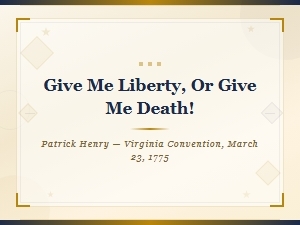 Iconic Phrases From Revolutionary War Leaders Explained
 Common Expressions That Originated During the Revolutionary War Era
 Medieval Period Reforms: Key Events Summary for Students
 Crafting Varied Sentences About the Magna Carta in Essays