You probably say things every week that trace back to the 1770s without knowing it. Phrases like "bite the bullet" and "don't fire until you see the whites of their eyes" didn't just appear out of thin air. They were born during one of the most intense periods in American history the Revolutionary War. Understanding where these expressions came from gives you a richer grasp of the English language and a deeper connection to the people who shaped American independence.
What Revolutionary War-era expressions are still used today?
Many common English phrases used in everyday conversation got their start during the American Revolution (1775–1783). Soldiers, political leaders, and colonists created vivid language out of necessity. They needed ways to describe danger, loyalty, betrayal, and courage and those descriptions stuck around for centuries.
Here are some of the most well-known expressions with roots in the Revolutionary War period:
- "Don't fire until you see the whites of their eyes" Attributed to American officers at the Battle of Bunker Hill in 1775, this command was about conserving limited ammunition by waiting until the enemy was extremely close before shooting. Today, people use it to mean patience and timing.
- "Don't tread on me" From the Gadsden flag, featuring a coiled rattlesnake. Christopher Gadsden designed it in 1775 as a warning to the British. It now broadly signals personal independence and resistance to oppression.
- "Bite the bullet" Soldiers undergoing battlefield surgery were reportedly given a bullet to clench between their teeth to cope with pain. While the exact origin is debated by historians, the expression became widespread during this era and means to endure something difficult with courage.
- "Turning a blind eye" Often connected to military strategy during the 18th century, this phrase means to deliberately ignore something inconvenient. It gained popular use in the broader context of military conflicts including the Revolutionary period.
- "My country, right or wrong" This expression about unconditional patriotism has deeper roots in the Revolutionary period, when loyalty to the cause of independence was a matter of life and death.
- "Give me liberty, or give me death" Patrick Henry's famous declaration in 1775 became shorthand for choosing freedom over submission. People still use variations of it when describing someone willing to risk everything for a cause.
- "The die is cast" While originally attributed to Julius Caesar, this phrase about irrevocable decisions saw heavy use among Revolutionary leaders weighing the risks of rebellion against the British Crown.
If you want to explore more of these, our collection of expressions that originated during the Revolutionary War era covers additional examples with historical context.
Why did so many lasting phrases come from this period?
The Revolutionary War was a high-stakes, emotionally charged time. People were fighting for survival, identity, and a new form of government. In moments like that, language gets compressed into sharp, memorable lines.
A few reasons these expressions lasted:
- They were practical. Military commands like "don't fire until you see the whites of their eyes" solved a real problem limited gunpowder supply. Practical advice tends to stick around.
- They captured universal feelings. "Give me liberty, or give me death" isn't just about 1775. It speaks to anyone who has ever felt strongly about freedom. That emotional weight keeps phrases alive across generations.
- They were widely repeated. Pamphlets, newspapers, and word of mouth spread these phrases through the colonies. Writers like Thomas Paine used powerful, direct language in works like Common Sense (1776), which sold hundreds of thousands of copies. You can learn more about sentences spoken by Revolutionary War leaders and how their words shaped public opinion.
- They were short enough to remember. The best expressions fit into a single breath. Long speeches get forgotten, but punchy one-liners survive.
How can you tell if a common phrase actually came from the Revolutionary War?
This is where many people get it wrong. Not every phrase that feels old actually comes from the Revolution. Some expressions were popularized during the era but have older roots. Others are wrongly attributed to Revolutionary figures through legend and repetition.
Common mistakes include:
- Assuming "one if by land, two if by land" was a common phrase. The actual signal was "one if by land, two if by sea," referring to Paul Revere's midnight ride in 1775. People misquote this frequently.
- Confusing Civil War and Revolutionary War phrases. Some well-known military expressions got their start in the 1860s, not the 1770s. Check your dates before attributing a phrase to the wrong war.
- Taking quotes at face value. Historians have shown that some famous Revolutionary War quotes were paraphrased, exaggerated, or invented after the fact by biographers. A good example is the George Washington estate's research, which has clarified many misattributed quotes over the years.
- Overlooking British origins. Some phrases used by Americans during the Revolution were actually common British military terms that both sides used. The phrase was popularized in America but didn't originate there.
For students working on research papers or history projects, we've put together a list of famous quotes from the American Revolution with verified sourcing to help you separate fact from legend.
Where do these expressions show up in modern life?
You might be surprised how often Revolutionary War language appears in daily conversation, news headlines, sports commentary, and political speeches.
- Politics: "Don't tread on me" shows up on flags, bumper stickers, and campaign materials across the political spectrum. Politicians routinely invoke Revolutionary language to frame their arguments about rights and government overreach.
- Sports: Coaches tell athletes to "bite the bullet" before tough games. Commentators describe teams as fighting with "revolutionary spirit."
- Business: Motivational speakers and executives use expressions like "crossing the Rubicon" (another military phrase sometimes blended with Revolutionary War language) to describe bold decisions.
- Everyday speech: When someone says "the ball is in your court" or tells you to "hold the line," they're using language shaped by 18th-century military life, even if they don't realize it.
What are the best ways to learn and remember these expressions?
Memorizing a list of phrases without context doesn't work well. Here are methods that actually help:
- Learn the story behind each phrase. Knowing that "don't fire until you see the whites of their eyes" came from a desperate shortage of ammunition at Bunker Hill makes it far easier to remember and to use correctly.
- Use them in writing or conversation. Apply one new phrase per week. If you're writing an essay about taking a risk, try working in "the die is cast" and explain the reference. Active use builds memory.
- Read primary sources. Pamphlets, letters, and speeches from the era give you the phrases in their original context. The Library of Congress digital archives offer free access to many original Revolutionary War documents.
- Compare old and new meanings. Some phrases have drifted in meaning over time. "Turning a blind eye" originally described a deliberate tactical choice. Now it's more often used to describe willful ignorance. Noting these shifts helps you use the phrases accurately.
Quick reference: 10 Revolutionary War expressions and their meanings
| Expression | Original Context | Modern Meaning |
|---|---|---|
| Don't fire until you see the whites of their eyes | Battle of Bunker Hill, 1775 | Wait for the right moment before acting |
| Don't tread on me | Gadsden flag, 1775 | Respect my independence; don't oppress me |
| Bite the bullet | Battlefield surgery | Endure something painful with courage |
| Give me liberty or give me death | Patrick Henry's speech, 1775 | Freedom is worth any sacrifice |
| The die is cast | Decision to rebel against Britain | A decision has been made; there's no going back |
| Crossing the Rubicon | Used figuratively by Revolutionary leaders | Passing a point of no return |
| A shot heard round the world | Ralph Waldo Emerson on Lexington and Concord | An event with massive, far-reaching consequences |
| Hold the line | Infantry battlefield commands | Stay firm; don't give ground |
| In the trenches | Military field positions | Deeply involved in hard, detailed work |
| My country, right or wrong | Revolutionary-era patriotism | Unconditional loyalty to one's nation |
Practical checklist for using Revolutionary War expressions correctly
- Verify the origin before citing a phrase in an essay or speech many are misattributed
- Know the original context so you don't misuse a phrase that started as a military command
- Consider your audience some expressions carry political weight today that may distract from your point
- Pair the phrase with a brief explanation if you're writing for readers who may not know the history
- Start with one expression per week and practice using it naturally in conversation or writing
- Read primary sources from the Revolutionary period to encounter these phrases in their authentic setting
- Check a trusted etymology source like the Oxford English Dictionary if you're unsure about a phrase's timeline
Pick one expression from this article, look up the full historical event behind it, and share that story with someone this week. That single act of connecting language to history will make the phrase stick with you and you'll pass along a piece of the Revolutionary War that most people have forgotten the meaning of.
 How Revolutionary War Slogans Shaped the English We Speak Today
 Common Revolutionary War Phrases and Their True Meanings
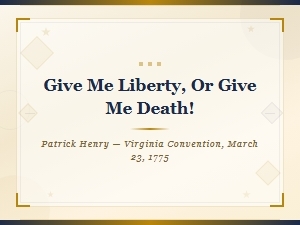 Iconic Phrases From Revolutionary War Leaders Explained
 Famous Quotes From the American Revolution for Students to Inspire and Learn
 Medieval Period Reforms: Key Events Summary for Students
 Crafting Varied Sentences About the Magna Carta in Essays